
Examples of Record Types
General Information
This page describes the different types of records encountered in the digital archive and provides examples of each. The terminology used here is found in the right most column of the Disk Descriptions file.
Often duplications of events can be found in this archive. Rather than requesting all of these records there is a priority that is recommended for ordering just one among a duplicated event as generally the same extent of information is found on the different records. Different scenarios of duplications are:
1. For most entries found in Compilation Tables (up to 1889) a Napoleonic record should also be present. Certainly the Napoleonic record should be of greater interest. An exception to this is that death records on a table may list names of surviving children. This information is typically not found on other records and can provide valuable insights into the makeup of the deceased's family. Such records include the term "surviving children listed" in the Special Notes field.
2. It seems at least two copies of Attest records were made and one was kept at the local church and the second sent to Lublin, Chelm, Kamien or some other parish. Eventually for many records both copies of the Attest forms ended up in this archive in Lublin. These records are equivalent but if one has an associated addendum it is recommended to order that copy with its addendum.
3. Alegata often duplicate birth or death records from Lublin, Kamien, Cycow, or Konskowola. Alegata events occuring outside of these parishes provide an opportunity to obtain these specific records provided by another church. If the type of alegata is indicated as a birth or death certification these are usually Napoleonic records but the level of information given equals that of an Attest or the original Napoleonic record (the certification representing a handwritten copy of the original). If the event occured prior to 1890 (found in disk 1-20) the original record should be Napoleonic so no benefit would be served getting the alegata certification over the original record. It the event occured 1890 or later then the alegata certification would likely serve as the Napoleonic version of the original Attest record. A notable exception to all this is for events that were recorded in Kamien. Because all records in Kamien prior to 1916 (1876-1916) were lost in a fire, alegata birth and death certifications provide the only means to obtain records from this parish during this time period.
4. Akt Zeznania found in alegata often provide little helpful information other than parents and spouse so typically other records would be preferred. In rare cases it is indicated where Akt Zeznania provide full details of the birth.
5. Marriage Banns may duplicate what is found on other marriage records or compilation tables. Banns normally are not as informative so clearly another record type would be preferred.
Napoleonic Records
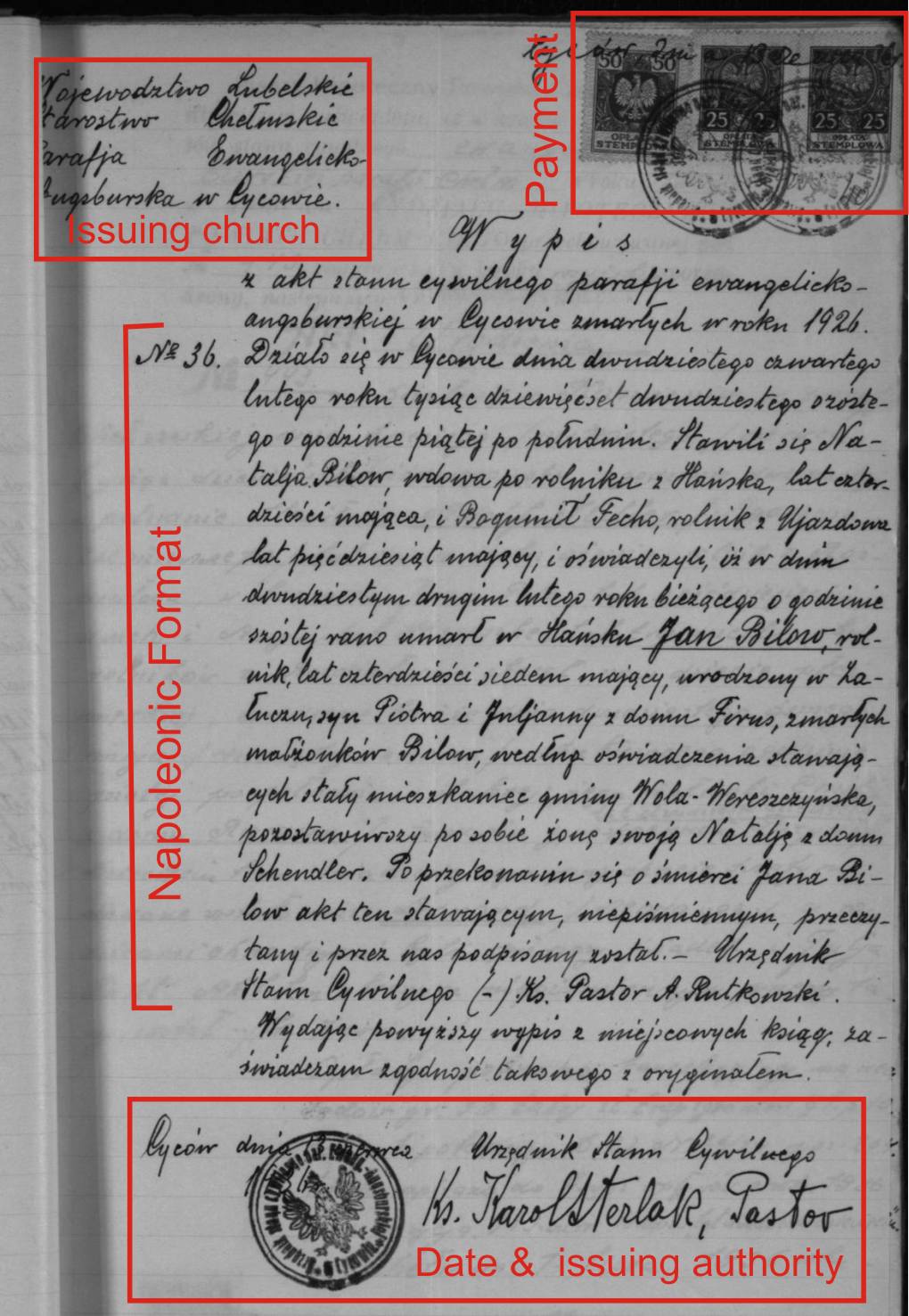
The SGGEE website pages on Translation Aids provides many examples of Napoleonic records. Disks 1-20 are entirely Napoleonic. Records from the parish of Konskowola also are mostly Napoleonic. The earliest records were written in Polish until Jun 1868 when the Russian language was used. The page on Translation Resources for Russian Documents provides examples of Russian Napoleonic records from this Lublin digital archive. Napoleonic records are often found in Alegata as birth or death certifications and these can be either in Polish or Russian regardless of the year they were transcribed from the original record.
Attest Records
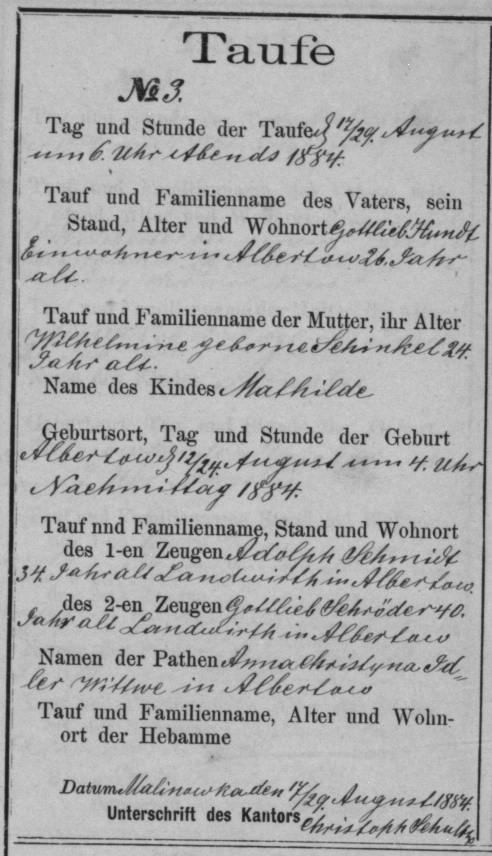
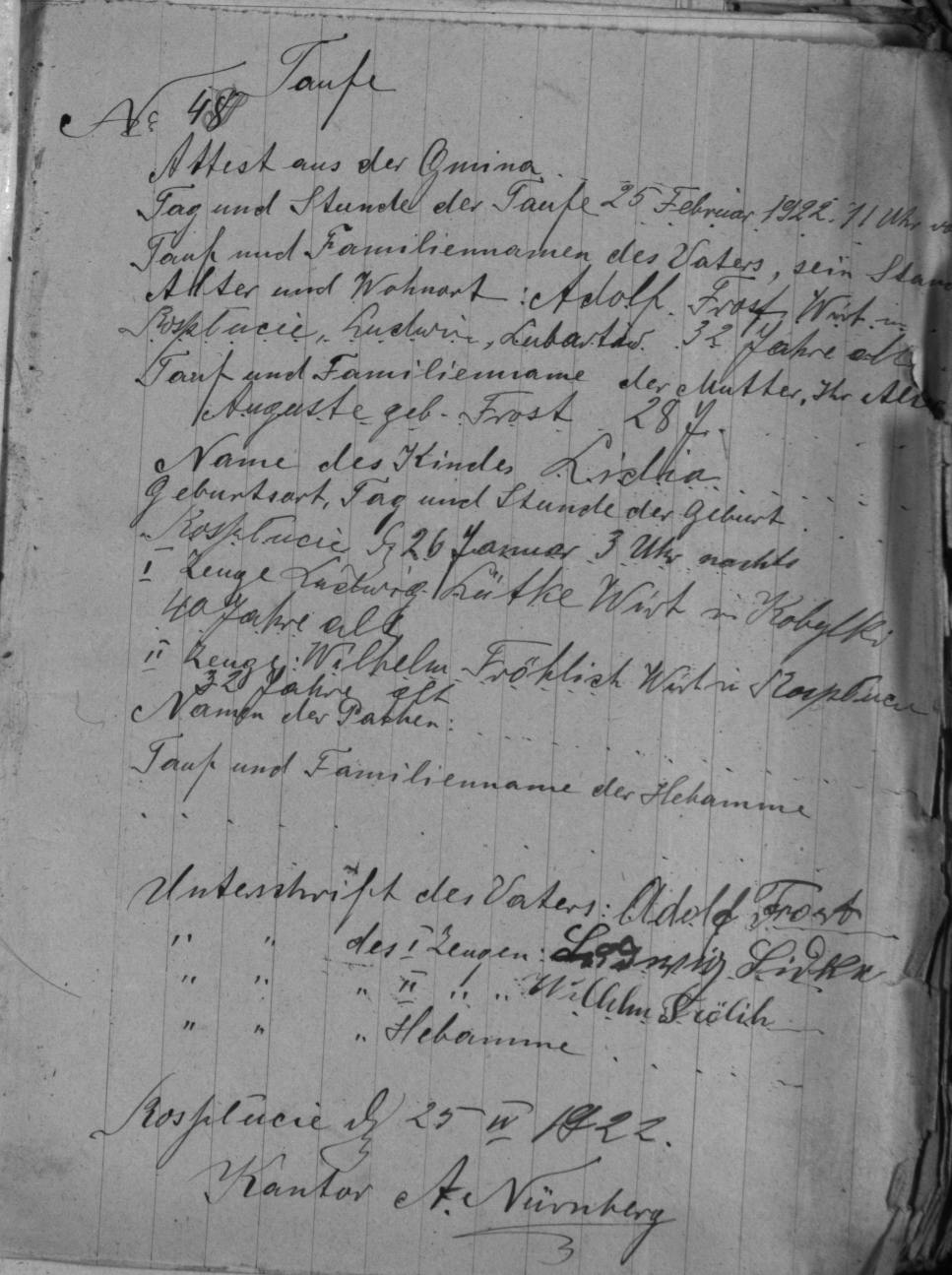
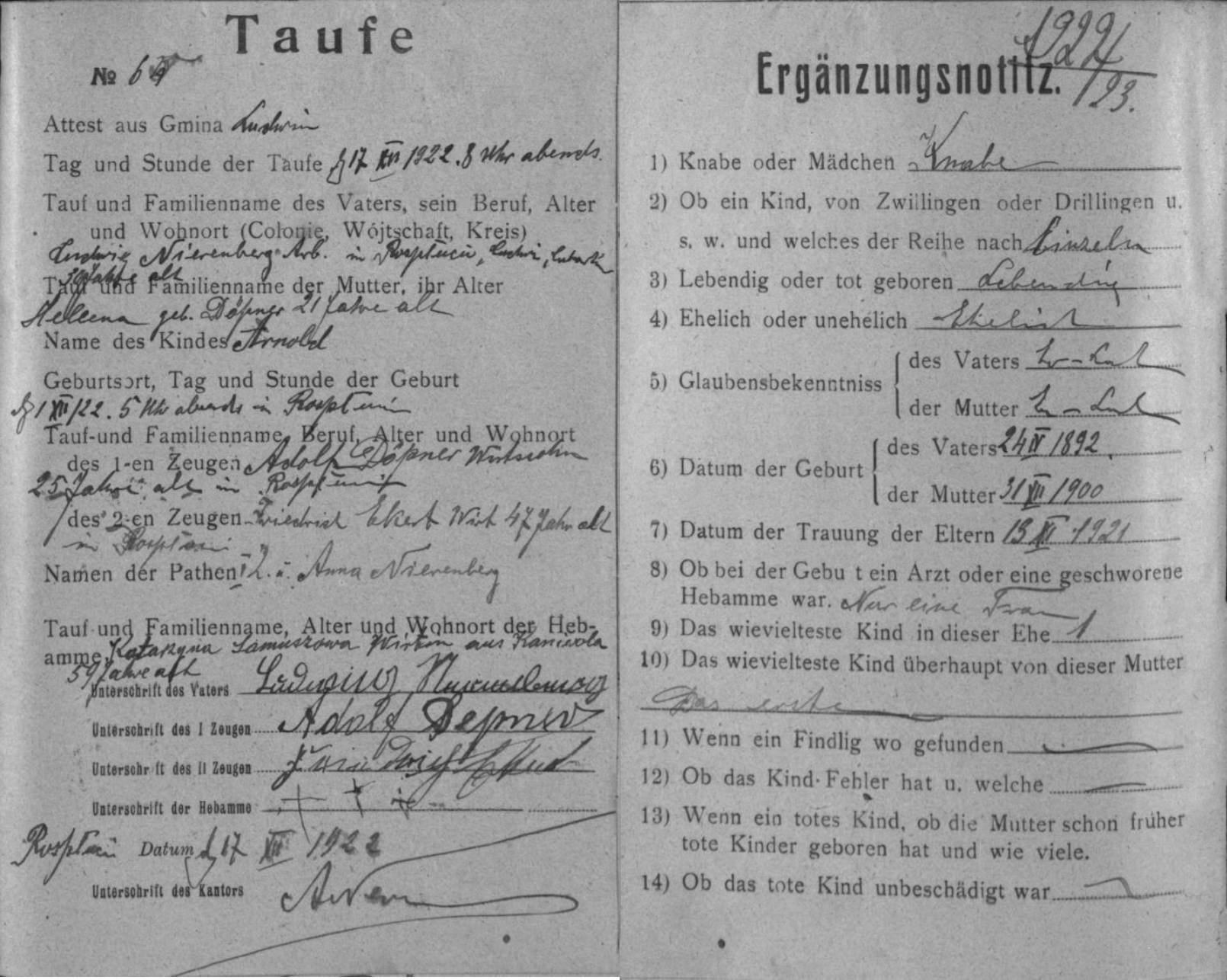
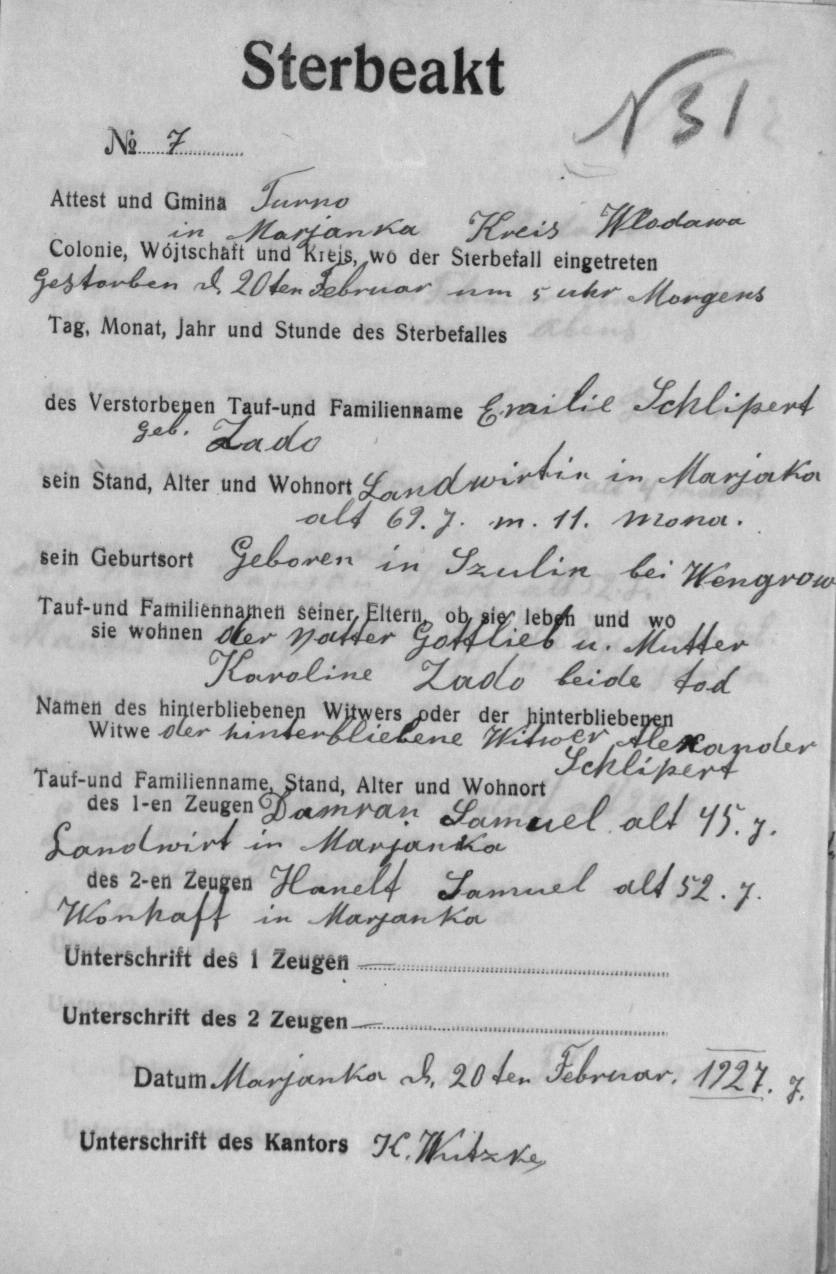
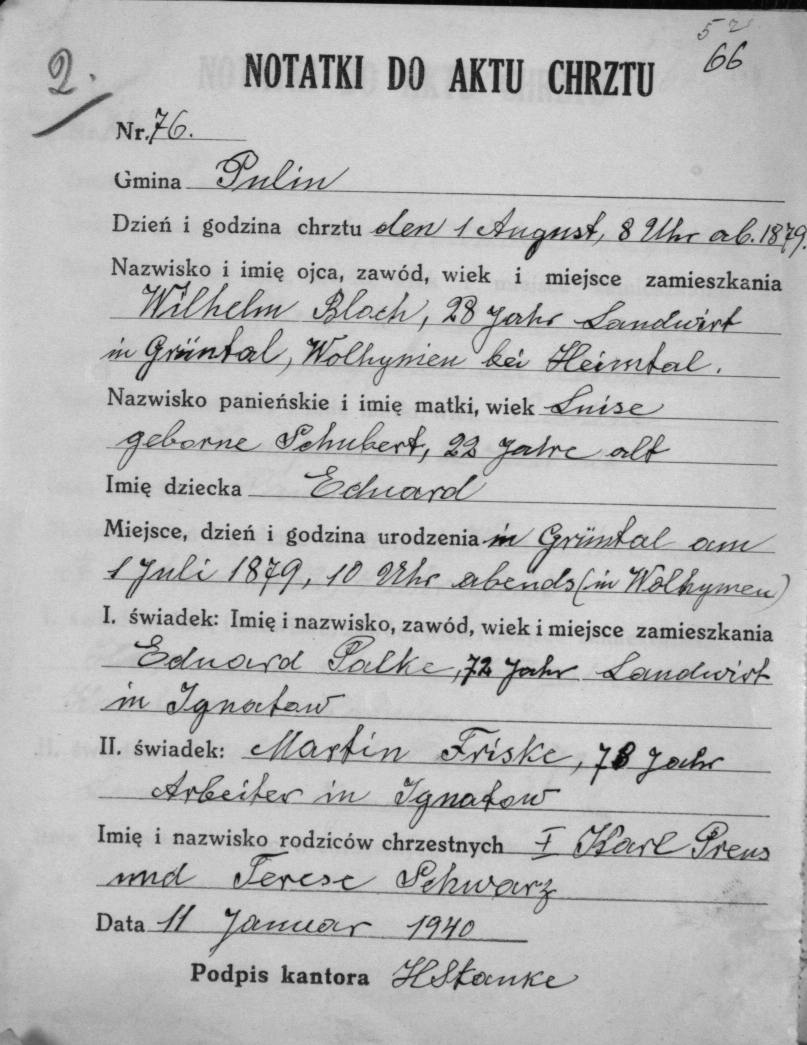
Attest seem to comprise the greatest proportion of the archive. These were generally forms from a printed book that were filled out. Attest records seem to “attest” to an event, hence the name given on these forms. Baptism or Death records are found in Attest forms and the pages could have been printed in either German (most common) or Polish. If forms were not available at the local church at that time the cantor would write out the entire record by hand.
Often the back side of a baptismal Attest form would have an Addendum (Ergänzungsnotiz). The supplementary information contained on this Addendum is very informative usually giving birth dates of the parents, their marriage date, how many children this couple has had up to that point, and other information regarding the birth.
German Baptismal Attest
German Handwritten Baptismal Attest
German Baptismal Attest with Addendum
German Death Attest
Polish Baptismal Attest
Compilation Tables
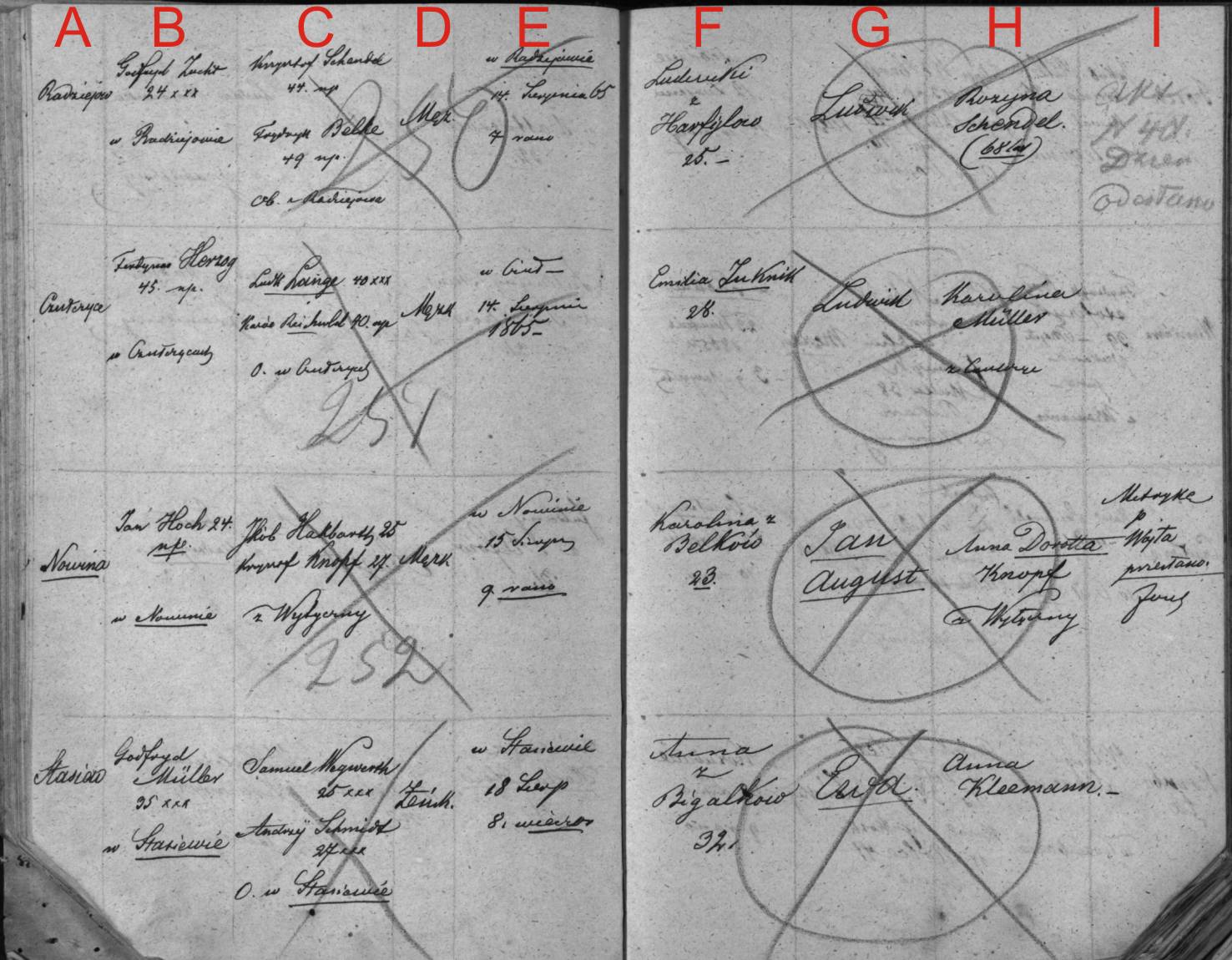
In addition to the formal records, every church maintained a register in which births, deaths, and marriages were compiled in tables. These tables duplicate what is found in Napoleonic and Attest records but since certain records may have been lost over the years they might also serve as alternative surviving documentation recording these events. These tables often do not state what is contained in each column. For the examples provided here the data shown in each column is explained. Tables may vary in the format the data is displayed but a pattern of what data was recorded in the tables can be deduced based on these examples.
| Column | BIRTHS | DEATHS | MARRIAGES |
| A | Town | Town | Register number |
| B | Father, age, town | Witnesses | Date |
| C | Witnesses, ages, town | Date | Witnesses |
| D | Sex of child | Name of deceased | Ages of witnesses |
| E | Date and time of birth | Age | Towns of witnesses |
| F | Mother, age | Parents and/or spouse | Marriage couple |
| G | Child | Cantor | Status of couple |
| H | Godmother, town | Ages of the couple | |
| I | Remarks | Towns of the couple | |
| J | Towns of couple's parents | ||
| K | Parents | ||
| L | Belief of couple's families | ||
| M | Dates wedding banns posted |
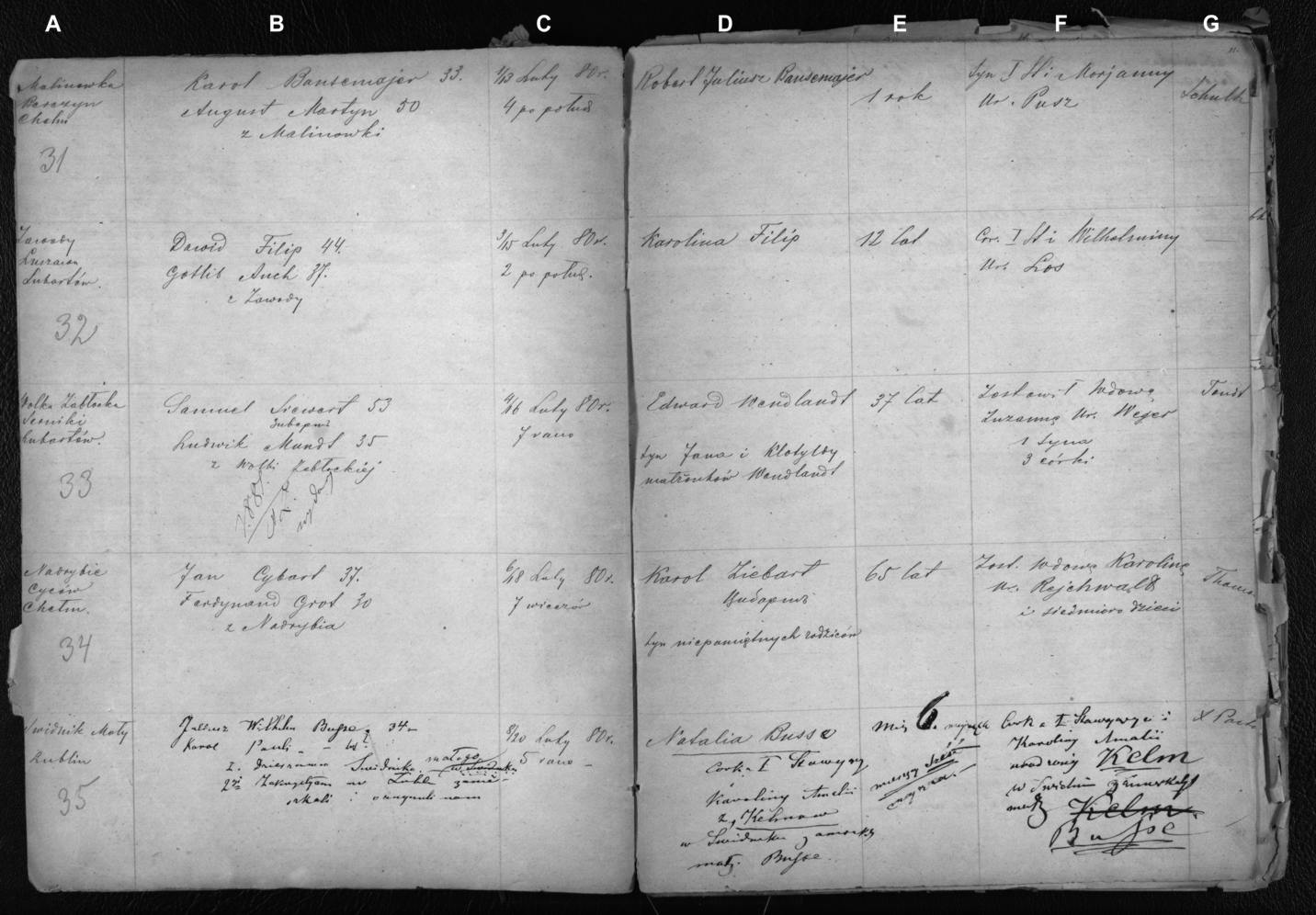
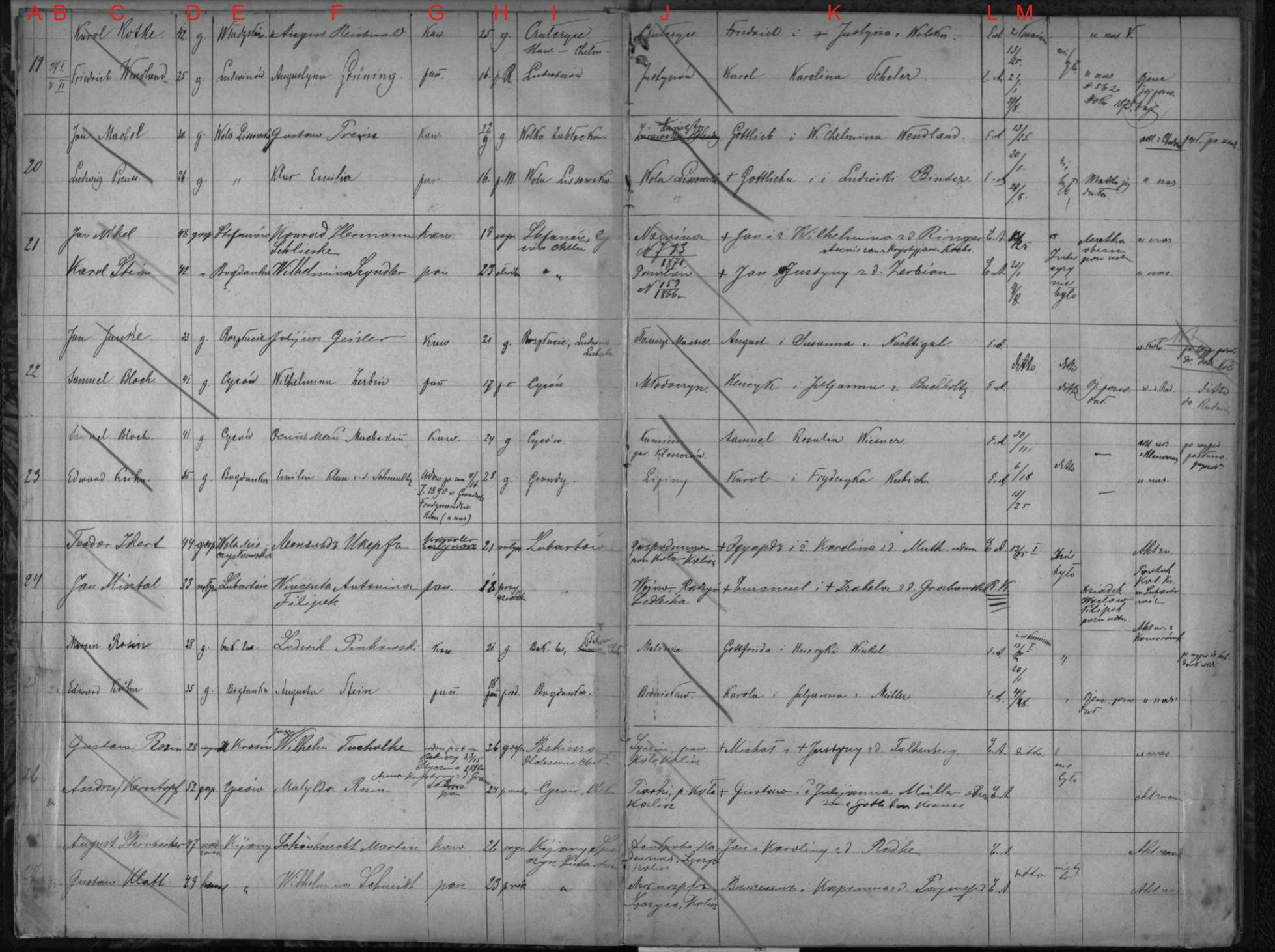
Marriage Compilation Tables (at least those in the 1860s) often list proposed couples that apparently did not complete the marriage banns procedure (see also note about banns at bottom of this page). These tables probably were written at the time the banns were started and indications were given where the couple did not end up getting married. Such cases include the term “did not marry” in the Special Notes field. As the project progresses, it will become evident if this trend in record keeping was maintained in later years. Certainly in later years separate forms were used for recording marriage banns.
Alegata
A good description of Alegata and the kinds of documents that can be found among them are given in Question 20 on this URL from the JewishGen site.
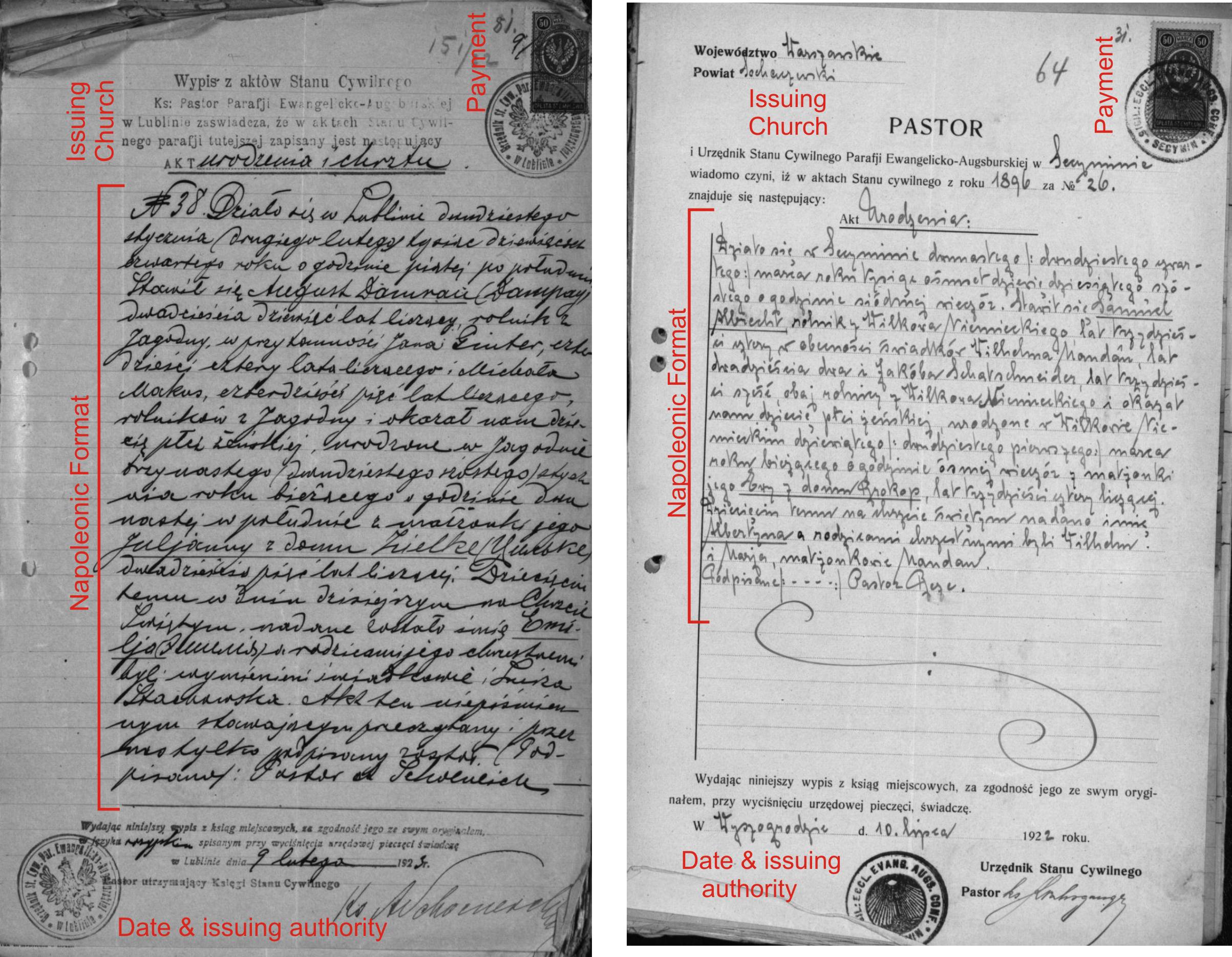
Birth Information - As stated in this description, documents pertinent to the birth of either marriage partner if their birth was recorded in another church are most often found in Alegata. A copy of the birth record (birth certification) was ordered from the other church or civil office where the records were kept. These records are most often handwritten copies of Napoleonic records including the date and location where it was issued from. An official seal is also stamped on the document certifying this information and stamps indicate that payment was made for this certificate. It appears every church or administrative office had its own style for making these certifications as seen in the example below, but the layout is usually consistent among them.
Birth Certifications
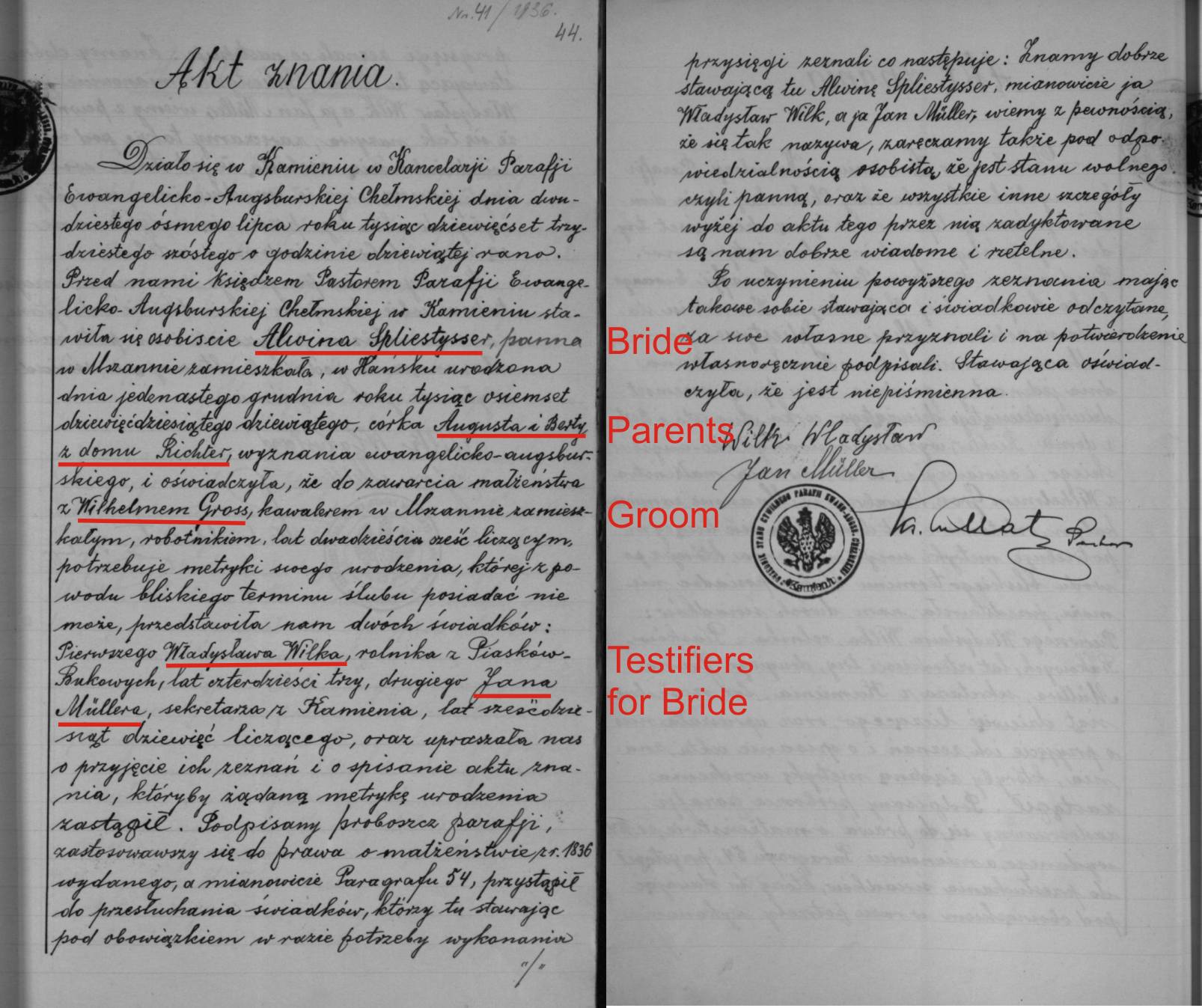
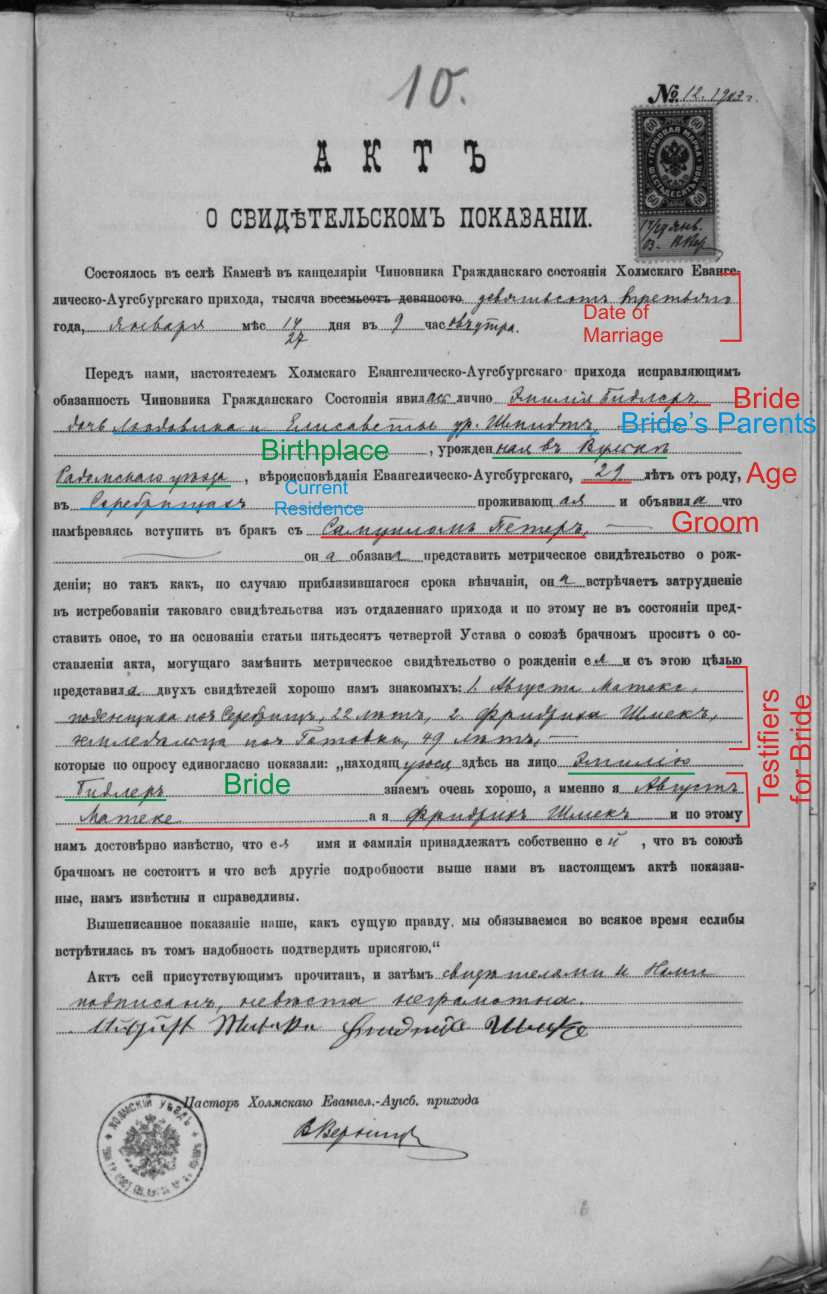
If an original birth certification could not be obtained then at least two witnesses who knew the person would have to present themselves and testify certain details on what they knew of the background of this proposed marriage candidate. These notarized documents would indicate the name of the person, his/her parents, where and possibly when the person was born, and the name of the proposed marriage partner. In Polish these documents were entitled Akt Znania (more appropriately Akt Zeznania) or translated more literally “Record of Knowledge”. In this database Akt Zeznania are included with marriage events (not births) since they provide not only the parents for the individual, but also the “tentative”spouse.
Akt Zeznania Form Pages (Polish)
Akt Zeznania Written (Polish)
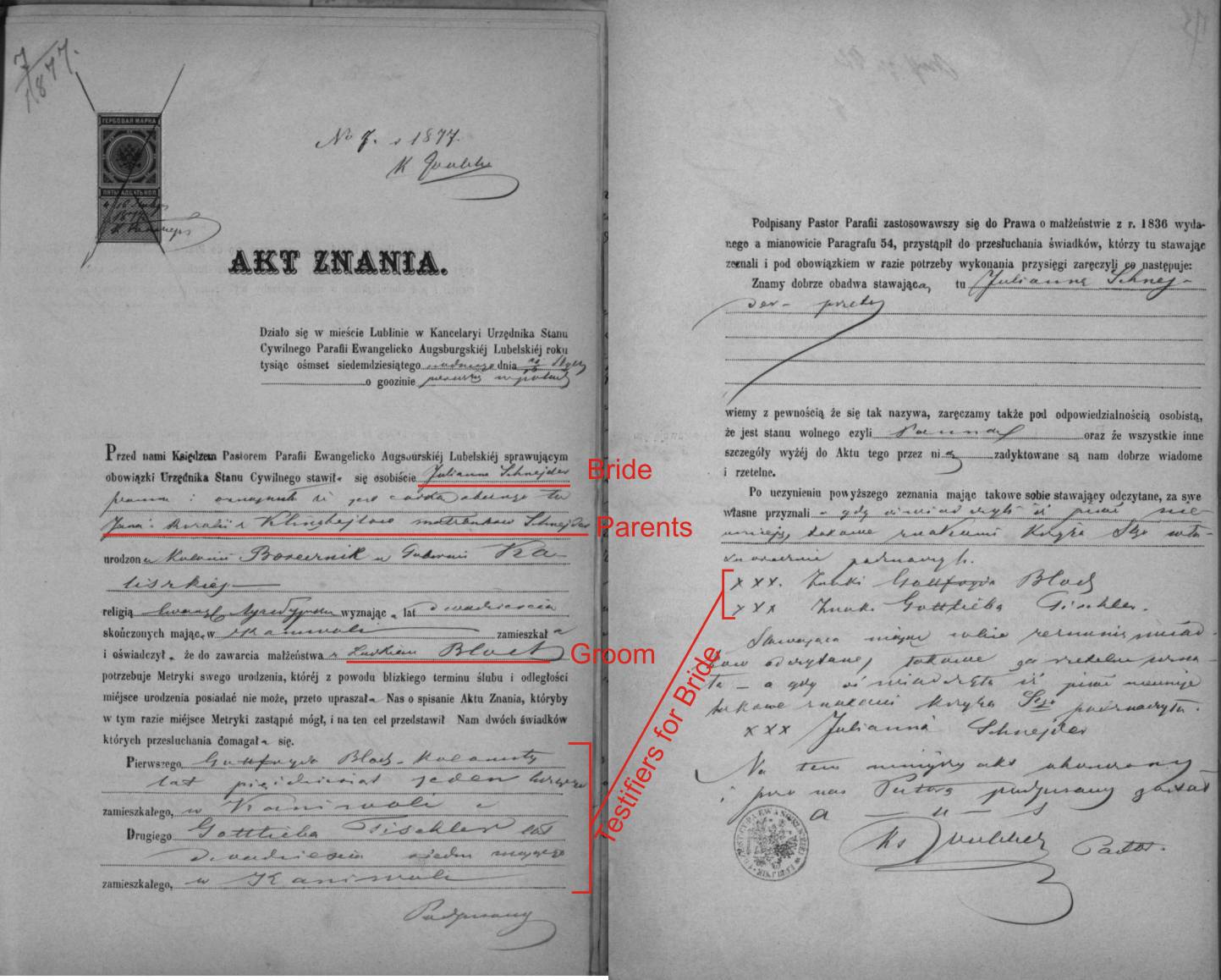
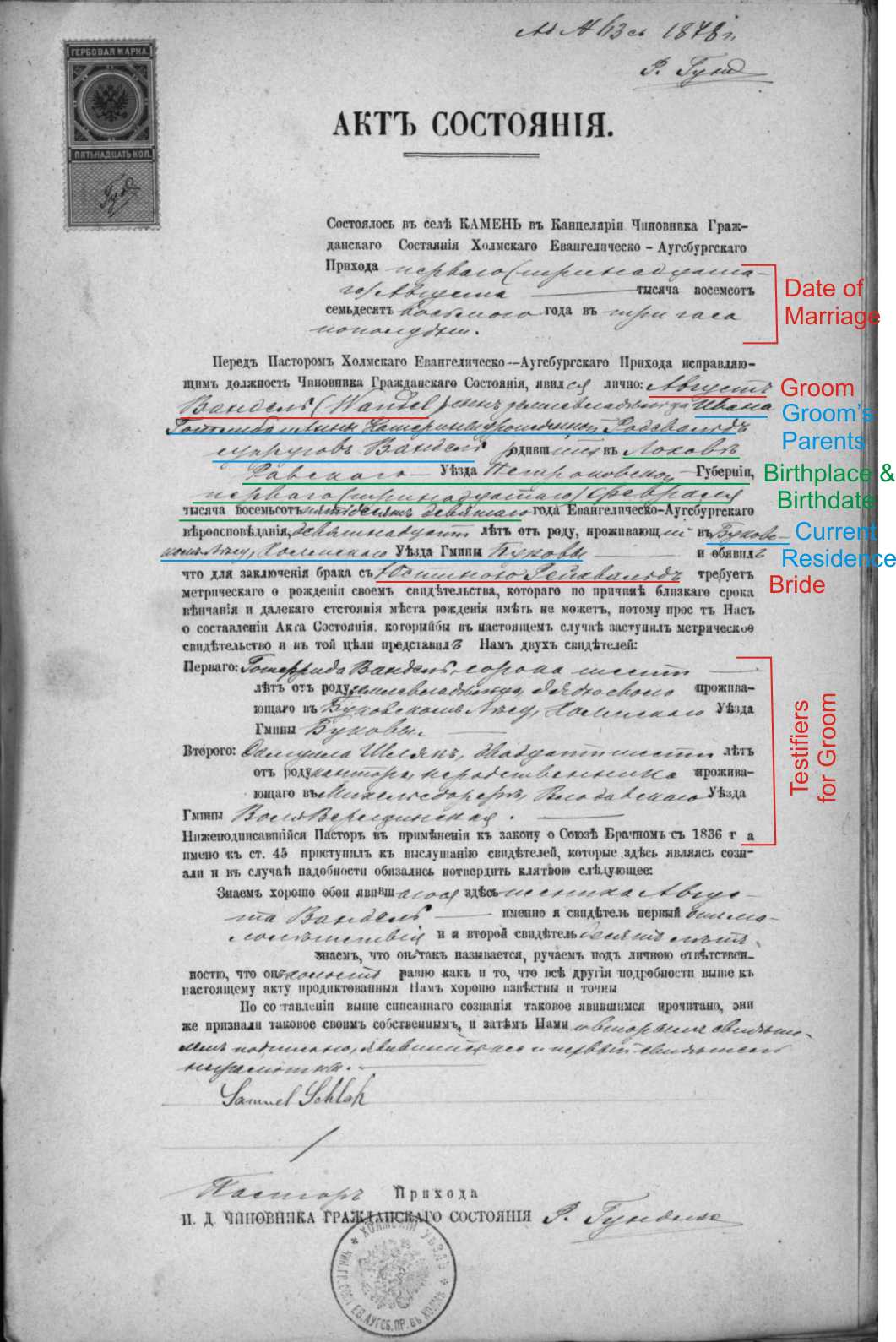
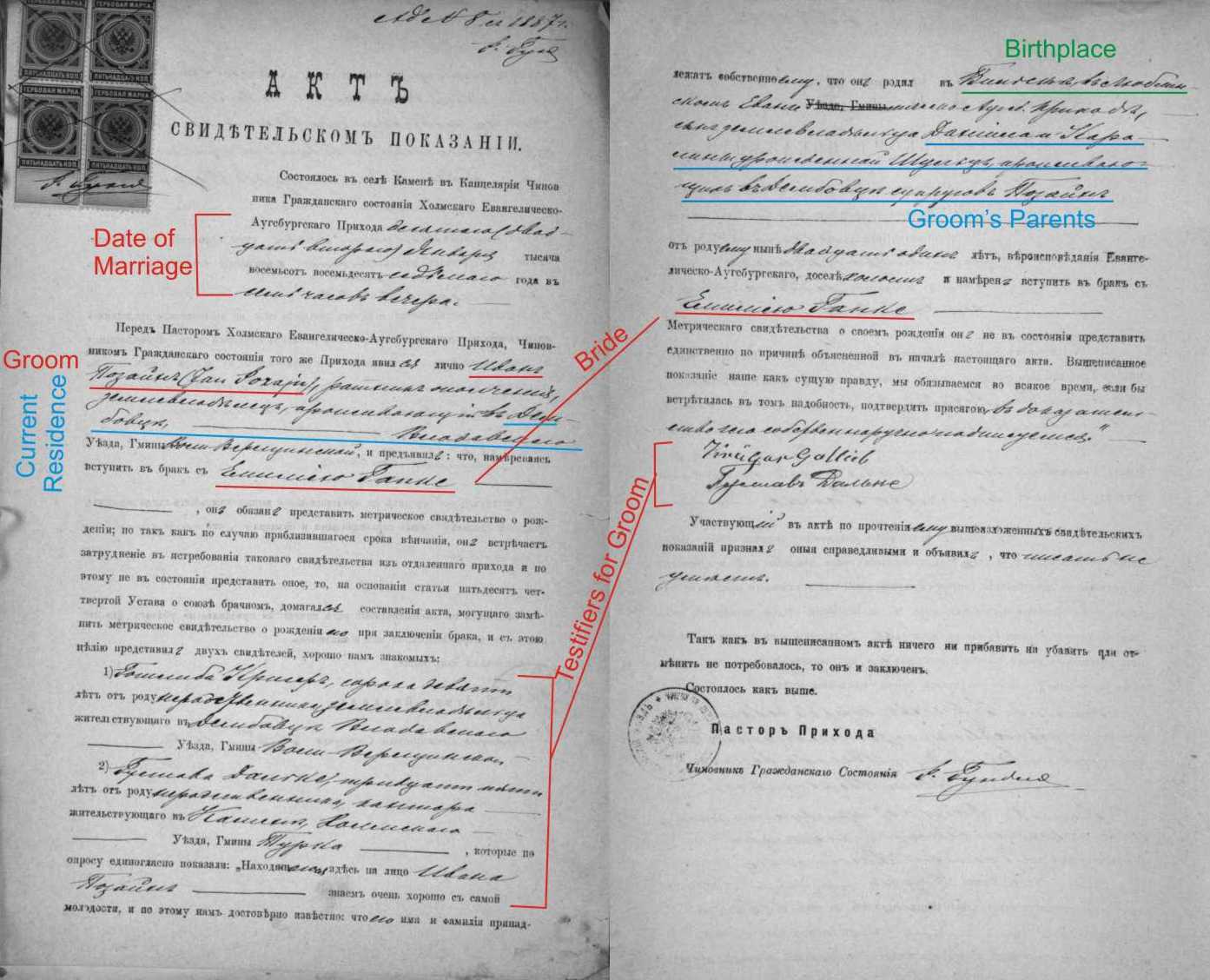
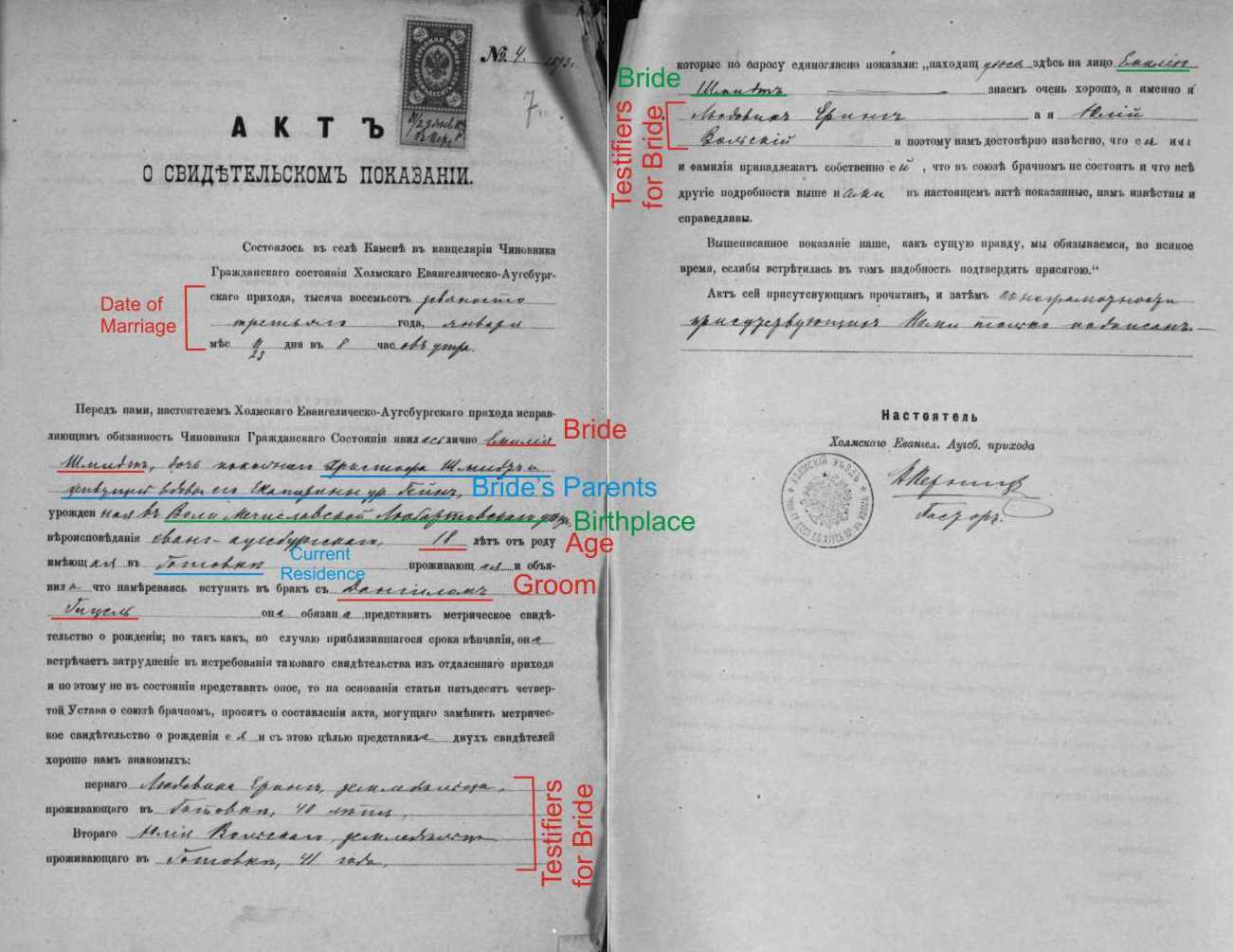
After 1870 we see Russian Akt Zeznania forms that change each decade. In the 1870s a single page form is used. In the 1880s into early 1890s a two page form is used which is changed slightly with the change of the decade. By the later 1890s they went back to a one page form which was continued into the early 1900s. Examples of each of these are given below. Since most people have no familiarity reading Cyrillic, more extensive detail of the information provided in these forms is given. Note though that the presentation of information parallels that of the Polish forms.
Akt Zeznania Form (Russian, 1870s, one page)
Akt Zeznania Form (Russian, 1880s, two pages)
Akt Zeznania Form (Russian, early 1890s, two pages)
Akt Zeznania Form (Russian, later 1890s-1900s, one page)
Death of a Previous Spouse - If either of the marriage couple was previously married a death certification of the previous spouse was necessary. These Death Certifications are presented as copies of Napoleonic records with the same annotations given for Birth Certifications described above.
Death Certification
Note: Birth and death certifications, are often seen received from other Lutheran parishes, some of which no surviving records are known to exist (such as Brzeziny or Rawa). Certifications received from these parishes therefore represent some of the rare records that remain originating from those Lutheran parishes.
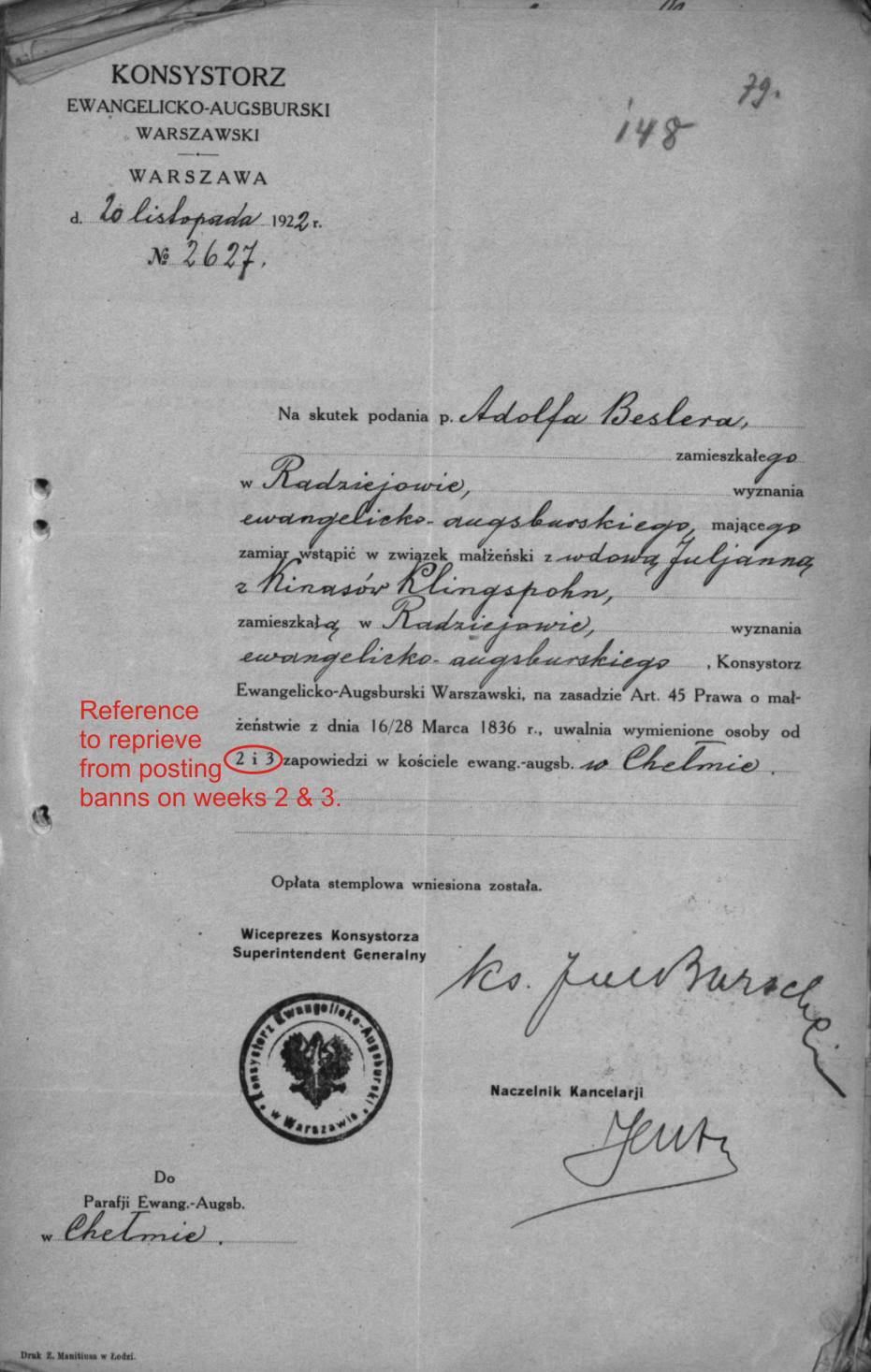
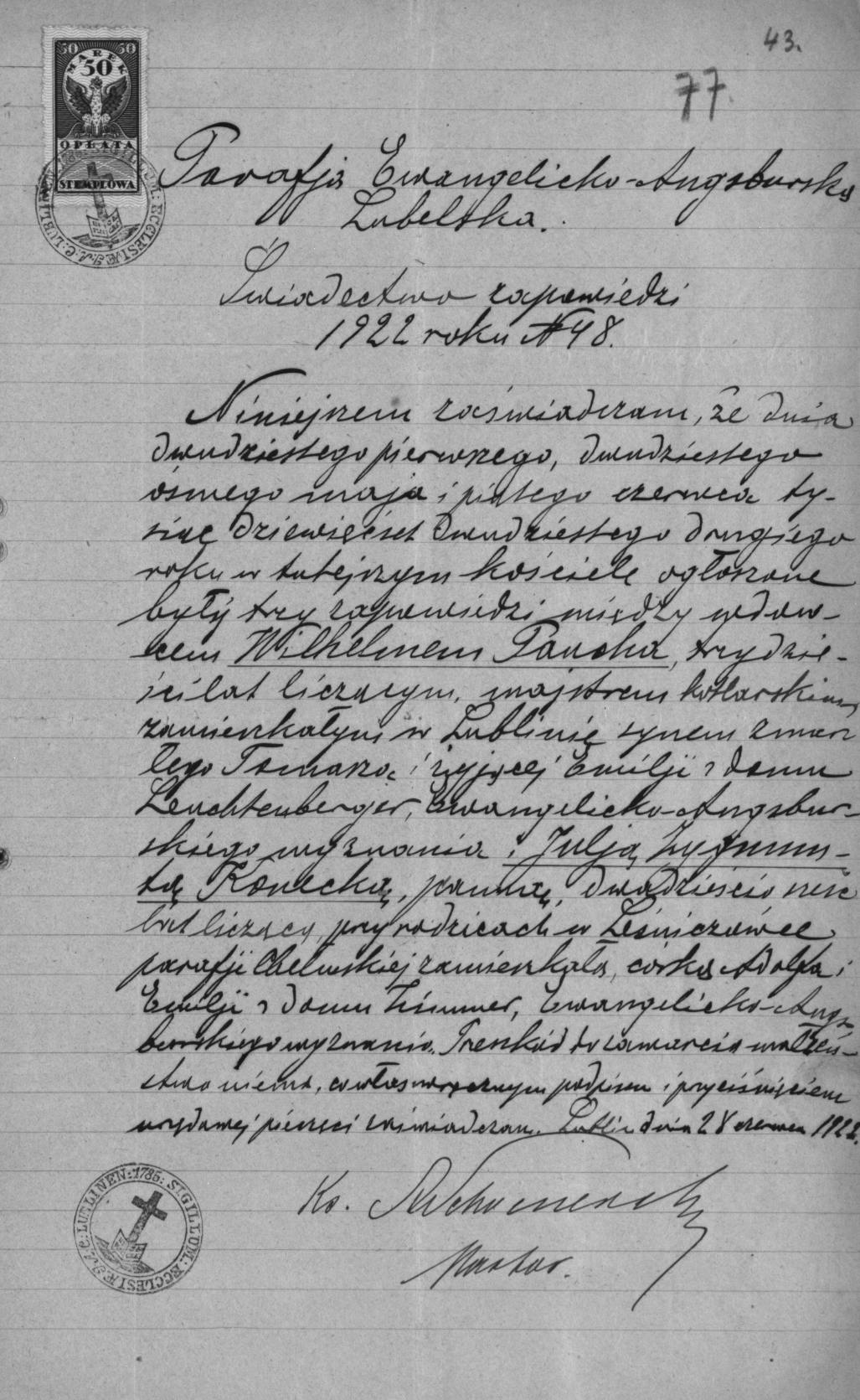
Information Regarding Marriage Banns - Alegata may also contain other administrative documentation pertinent to the process leading up to the marriage. Marriages were subject to banns where typically announcements of the forthcoming marriage were posted at the church giving others the opportunity to present any legal evidence to prevent the marriage from taking place. Most often these announcements were posted on three consecutive Sundays prior to the marriage. In some instances a release was given where only one announcement was required. These releases are found in Alegata and only provide the name of the wedding couple. Other related documents in Alegata simply state that the provision for posting the banns has been made and therefore they are cleared to have the marriage ceremony performed.
Release of marriage banns (weeks 2 & 3)
Fulfillment of posting marriage banns
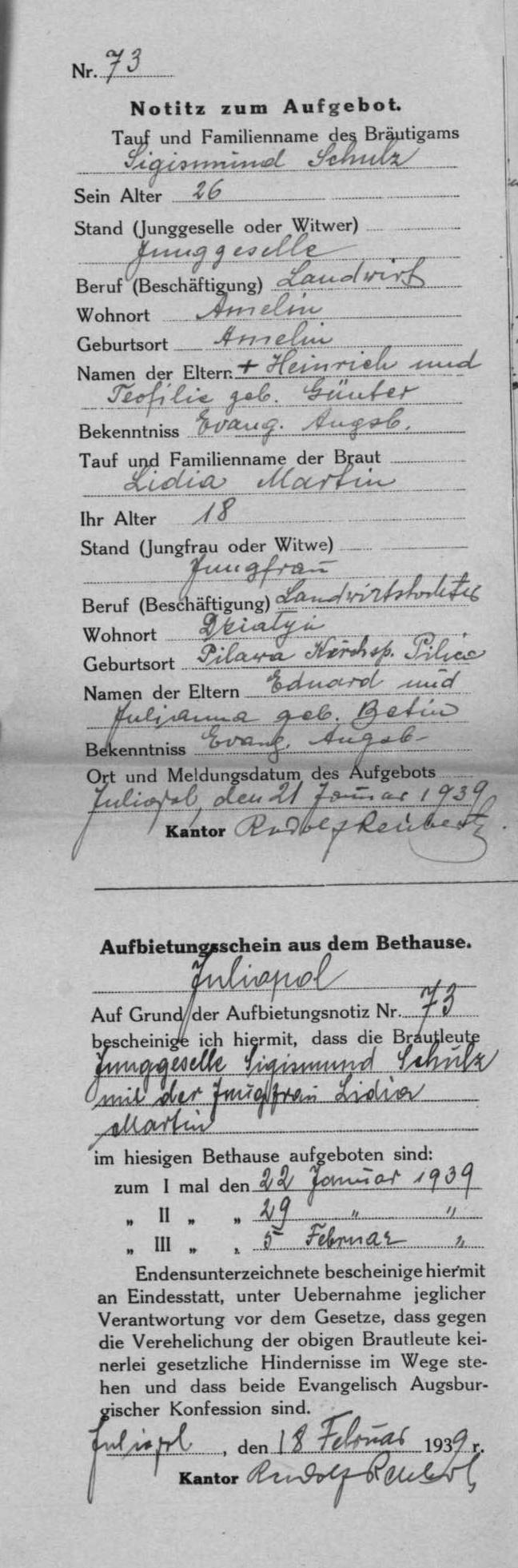
Marriage Banns
The printed German form has two sections in which some records may only include the lower half of the form (which only indicates the names of the proposed couple). Rarely instances are found where the couple apparently do not get married.
Marriage Bann Form (note two sections)